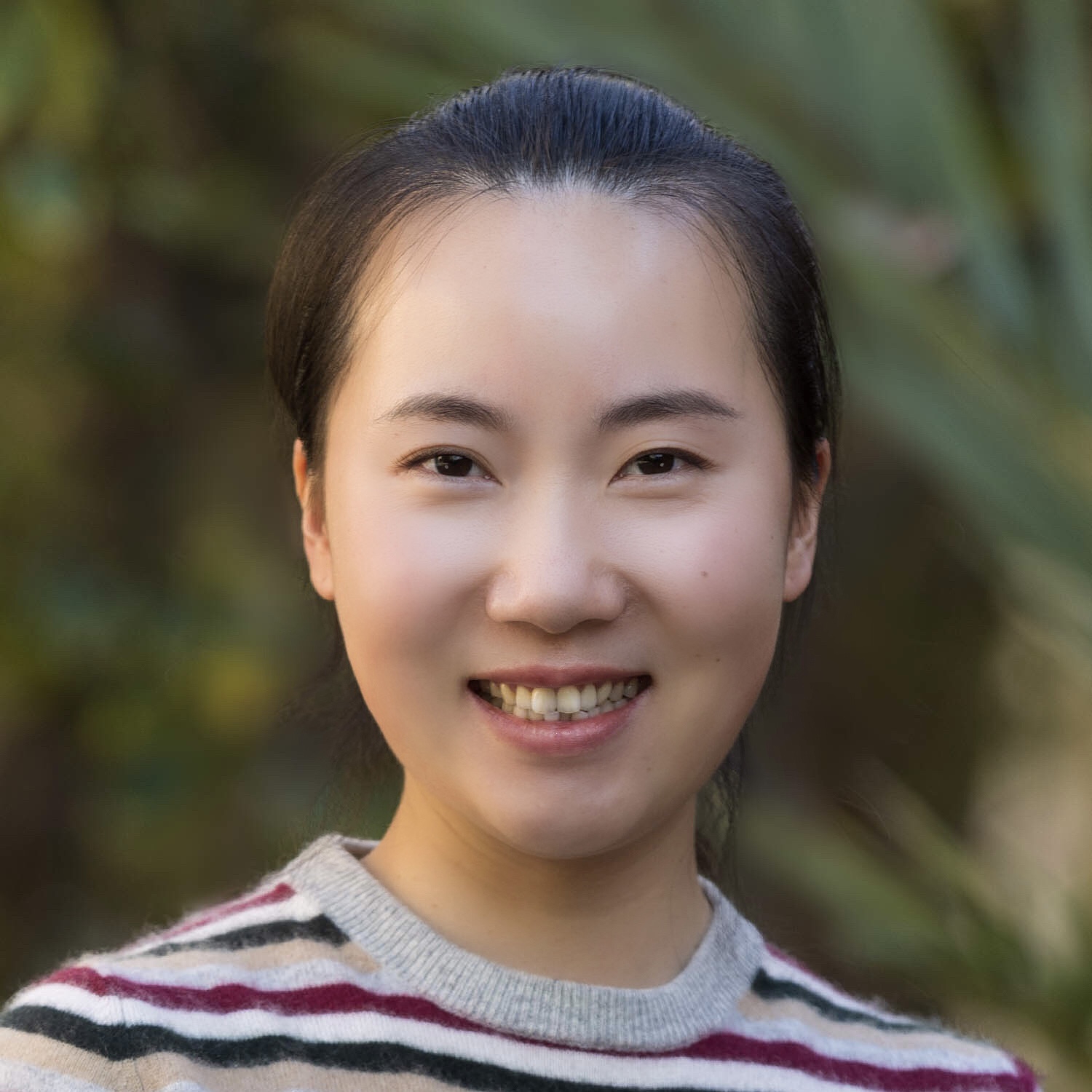
Luwei Yang
杨鲁薇
About Me
I am a Postdoctoral Research Fellow in the Ocean Modelling and Fluids Group , Department of Ocean Science, at The Hong Kong University of Science and Technology.
My research examines how small-scale ocean processes influence large-scale ocean circulation and the ocean’s role in Earth’s climate. I focus particularly on internal waves generated by winds, tides, and ocean currents. Although these waves occur at relatively small scales, they can affect large-scale circulation, surface tides, and turbulent mixing, with implications for the uptake, transport, and storage of heat and carbon in the ocean.
I use a combination of theory, numerical modelling, and observations to understand the physical mechanisms through which internal waves influence the larger-scale ocean, and to develop physically based parameterisations that represent their effects in global ocean and climate models.
Research interests
- Internal waves and their impacts on large-scale ocean circulation
- Interactions between mesoscale eddies and internal waves
- Representation of wave effects in ocean models
- Southern Ocean dynamics and circulation
Education
- 2015-2019: Ph.D. in Quantitative Marine Science, University of Tasmania, Hobart, Australia.
- 2011-2015: B.Sc. in Marine Science, Ocean University of China, Qingdao, China.
Employment
- 2026-present: Postdoctoral Research Fellow, Department of Ocean Science, Hong Kong University of Science and Technology, Hong Kong, China.
- 2026-present: Visiting and Honorary Appointee, Research School of Earth Sciences, Australian National University, Canberra, ACT, Australia.
- 2023-2026: Postdoctoral Research Fellow, Research School of Earth Sciences, Australian National University, Canberra, ACT, Australia.
- 2020-2023: Postdoctoral researcher, Department of Atmospheric & Oceanic Sciences, UCLA, Los Angeles, California, United States.
Publications
Peer-reviewed journal articles
- L. Yang*, Shakespeare, C.J., and B.K. Arbic. Propagating internal-tide-induced wave stresses resolve discrepancies in ocean surface tide energetics. Geophysical Research Letters, 2026. [doi]
- L. Yang*, C. J. Shakespeare, A. K. Morrison, A. M. Hogg, A. H. Gibson, and B. K. Arbic. Sensitivity of M2 barotropic tide solutions to resolution and a physically based wave drag parameterization. Journal of Advances in Modeling Earth Systems, 2026. [doi]
- A. J. Barnes, N. C. Constantinou, A. H. Gibson, A. E. Kiss, C. Chapman, J. Reilly, D. Bhagtani, and L. Yang. regional-mom6: A Python package for automatic generation of regional configurations for the Modular Ocean Model 6. Journal of Open Source Software, 2024. [doi]
- L. Yang*, R. Barkan*, K. Srinivasan, J. C. McWilliams, C. J. Shakespeare, & A. H. Gibson. Oceanic eddies induce a rapid formation of an internal wave continuum. Communications Earth & Environment, 2023. [doi]
- L. Yang, M. Nikurashin, A. M. Hogg, & B. M. Sloyan*. Lee waves break eddy saturation of the Antarctic Circumpolar Current. Geophysical Research Letters, 2023. [doi]
- R. Barkan, K. Srinivasan, L. Yang, J. C. McWilliams, J. Gula, & C. Vic. Oceanic mesoscale eddy depletion catalyzed by internal waves. Geophysical Research Letters, 2021. [doi]
- L. Yang*, M. Nikurashin, A. M. Hogg, & B. M. Sloyan. The impact of lee waves on the Southern Ocean circulation. Journal of Physical Oceanography, 2021. [doi]
- L. Yang*, M. Nikurashin, A. M. Hogg, & B. M. Sloyan. Energy loss from transient eddies due to lee wave generation in the Southern Ocean. Journal of Physical Oceanography, 2018. [doi]
Other publications
- L. Yang*, C. J. Shakespeare. Earth’s tides are shaped by more than the Moon. And they’re changing as the planet warms. The Conversation, 2026. [doi]